In food and beverage manufacturing, equipment must do more than simply perform its intended function. It also needs to withstand regular cleaning, resist corrosion and be designed without unnecessary areas where product or debris could collect.
At Acorn Engineering and Fabrications, we provide bespoke stainless steel fabrication in North East England, working with food and beverage manufacturers to produce practical equipment and resolve production problems.
For this reason, manufacturers throughout the industry rely on stainless steel. However, selecting the correct material is only part of the process. The design, fabrication method and quality of the finished surfaces are equally important.
Why is stainless steel used in food manufacturing?
Stainless steel is durable, corrosion-resistant and relatively easy to clean. Unlike painted or coated mild steel, there is no surface coating to chip or flake during normal use.
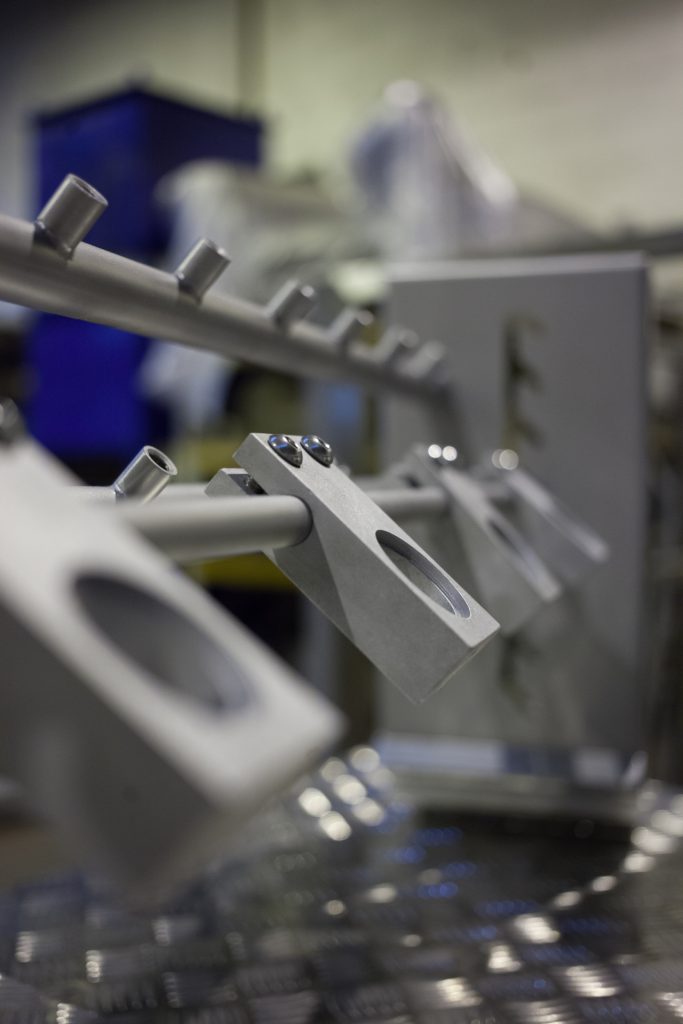
These properties make it suitable for many production and washdown environments. For example, fabricators use stainless steel to manufacture items such as:
• Machine guards and covers
• Trays, chutes and hoppers
• Worktables and preparation surfaces
• Pipework supports and brackets
• Frames and equipment stands
• Drip trays and catchment units
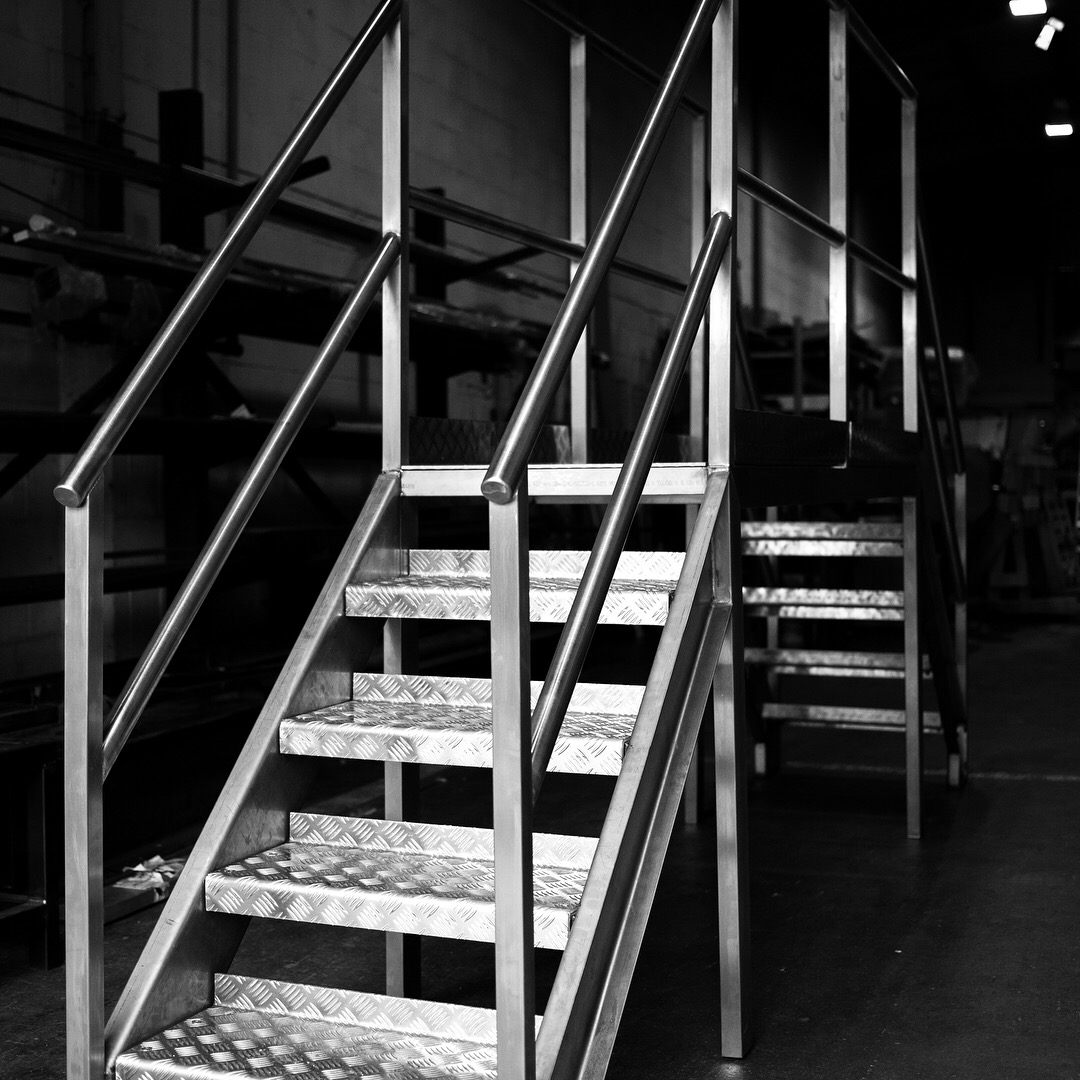
• Access platforms and steps
• Bespoke modifications to existing machinery
The most suitable design and material grade will depend on where the equipment is being installed, what it will come into contact with and how it will be cleaned.
Choosing between 304 and 316 stainless steel
Two of the most commonly used grades are 304 and 316 stainless steel.
Manufacturers commonly use Grade 304 for general food production equipment, work surfaces, guards and other components. It offers good corrosion resistance and is suitable for many indoor processing environments.
Grade 316 contains molybdenum, which provides greater resistance to corrosion. Fabricators may select it where equipment faces exposure to salt, more aggressive cleaning chemicals or particularly demanding processing conditions.
Using a more expensive grade is not automatically better. Base the correct choice on the application, operating environment and cleaning regime. Understanding how the finished item will be used helps avoid unnecessary costs while ensuring the material is suitable for the job.
Hygienic design involves more than the material
Simply manufacturing something from stainless steel does not automatically make it hygienic.
The design should also consider the shape of the equipment, its accessibility for cleaning and whether there are crevices or awkward areas where moisture and debris could collect.
Depending on the application, this may involve:
• Reducing unnecessary joints and overlapping sections
• Avoiding inaccessible gaps
• Using continuous welds where required
• Dressing and polishing welded areas
• Creating falls to prevent standing liquid
• Providing access for inspection and cleaning
• Minimising sharp corners and difficult-to-reach surfaces
These considerations are particularly important near open food production areas.
Surface finish and fabrication quality
The required finish will depend on the intended use of the equipment. Some components may only need a clean, consistent workshop finish, while exposed or hygienic surfaces may require welds to be fully dressed and polished.
In addition, fabricators must take care throughout the process to avoid contaminating stainless steel with particles from mild steel. Separate tools, suitable abrasives and careful handling help maintain the appearance and corrosion resistance of the finished product.
Accurate cutting and forming also make a difference. Well-planned folds can reduce the number of separate components and welded joints required, resulting in cleaner equipment that is easier to maintain.
Fabricating a practical solution
Food and beverage manufacturers do not always approach us with a completed drawing. In many cases, the starting point is a problem on the production floor.
An existing component may be difficult to clean, a guard may need modifying, or new equipment may have created an access or handling issue. Production changes can also mean that something which previously worked well is no longer suitable.
This is where experience of bespoke fabrication becomes particularly valuable.
By looking at how the area operates in practice, we can help develop a solution that considers:
• The available space
• Operator access
• Cleaning requirements
• Strength and durability
• Existing machinery
• Installation and future maintenance
• The need to minimise disruption to production
The best solution is not always the most complicated. Sometimes a relatively straightforward modification can improve access, reduce downtime or make a task considerably easier for operators.
One-off items and ongoing production support
Bespoke stainless steel fabrication can cover everything from a single replacement bracket to complete fabricated assemblies.
For one-off items, an existing component can often be used as a pattern or starting point. For repeat requirements, we can retain templates and fabrication details to maintain consistency when customers need further items.
Having access to cutting, forming, welding, machining and finishing facilities in-house also allows different parts of a project to be coordinated through one workshop.
Stainless steel fabrication in North East England
Based in Blaydon on Tyne, Acorn Engineering and Fabrications has decades of experience supporting manufacturers with bespoke sheet metalwork and engineering solutions.
We work with businesses throughout North East England, manufacturing directly from customer drawings as well as helping to develop practical solutions for production and maintenance requirements.
From individual components and equipment modifications to complete stainless steel assemblies, we approach every project according to its intended use and working environment.